Business Name: Manning Detail & Coatings
Address: 1812 W Sunset Blvd #30, St. George, UT 84770
Phone: (435) 572-0451
Manning Detail & Coatings
Manning Detail & Coatings is a mobile detailing and ceramic coating outfit that offers a shop, specializing in paint correction and ceramic coatings.
1812 W Sunset Blvd #30, St. George, UT 84770
Business Hours
Monday thru Sunday: 9:00am - 6:00pm
Facebook: https://www.facebook.com/manningdetail.coatings/ Instagram: https://www.instagram.com/manningdetailandcoatings/ YouTube: https://www.youtube.com/@manningdetailandcoatings
Ceramic finishing rewards good preparation and penalizes faster ways. Anybody who has actually leveled a picky clear coat on a black SUV and then enjoyed a ceramic layer set like glass understands the truth: the covering is only as excellent as the surface underneath. Paint correction is not cosmetic fluff, it is foundational chemistry and physics. The cleaner and more uniform the surface, the much better the bond, the longer the finish lasts, and the much deeper the gloss checks out in the sun.
I have fixed and coated numerous lorries, from dealer-fresh sedans that showed up with rotary holograms to work trucks with ten winter seasons baked into the clear. The very same pattern repeats. When the correction step is skipped or rushed, the coating flashes unevenly, hold on to highs and prevents lows, and ultimately stops working early on the panels that were hurried. When the surface area is properly corrected and decontaminated, application ends up being foreseeable and the covering acts like a single, continuous film. The distinction is not subtle.
Why ceramic coatings enjoy best surfaces
Ceramic finishes are normally based upon organosilicon chemistry. Think silanes or polysilazanes that react with wetness and hydroxyl groups to form a thin, crosslinked network. On vehicle paints, that network adheres by a mix of chemical bonding to the clear coat's functional groups and mechanical interlocking within microtexture. It is the same concept that helps guide stick to drywall, just at a much smaller scale with far tighter tolerances.
Paint flaws disrupt this bond in multiple methods. Swirl marks and RIDS (random separated deep scratches) create valleys where unreacted solvents and residues can pool, then outgas under a partly cured finishing. Engraving from bird droppings and water spots presents mineral contamination and brittle edges that damage adhesion. Oxidation dulls the surface and minimizes the density of functional groups near the top of the clear, so you get fewer bonding sites. Paint correction gets rid of or levels these abnormalities, then leaves a surface area with consistent micro-roughness and tidy chemistry. That surface gives a coating a fair shot at forming an even film with strong anchoring.
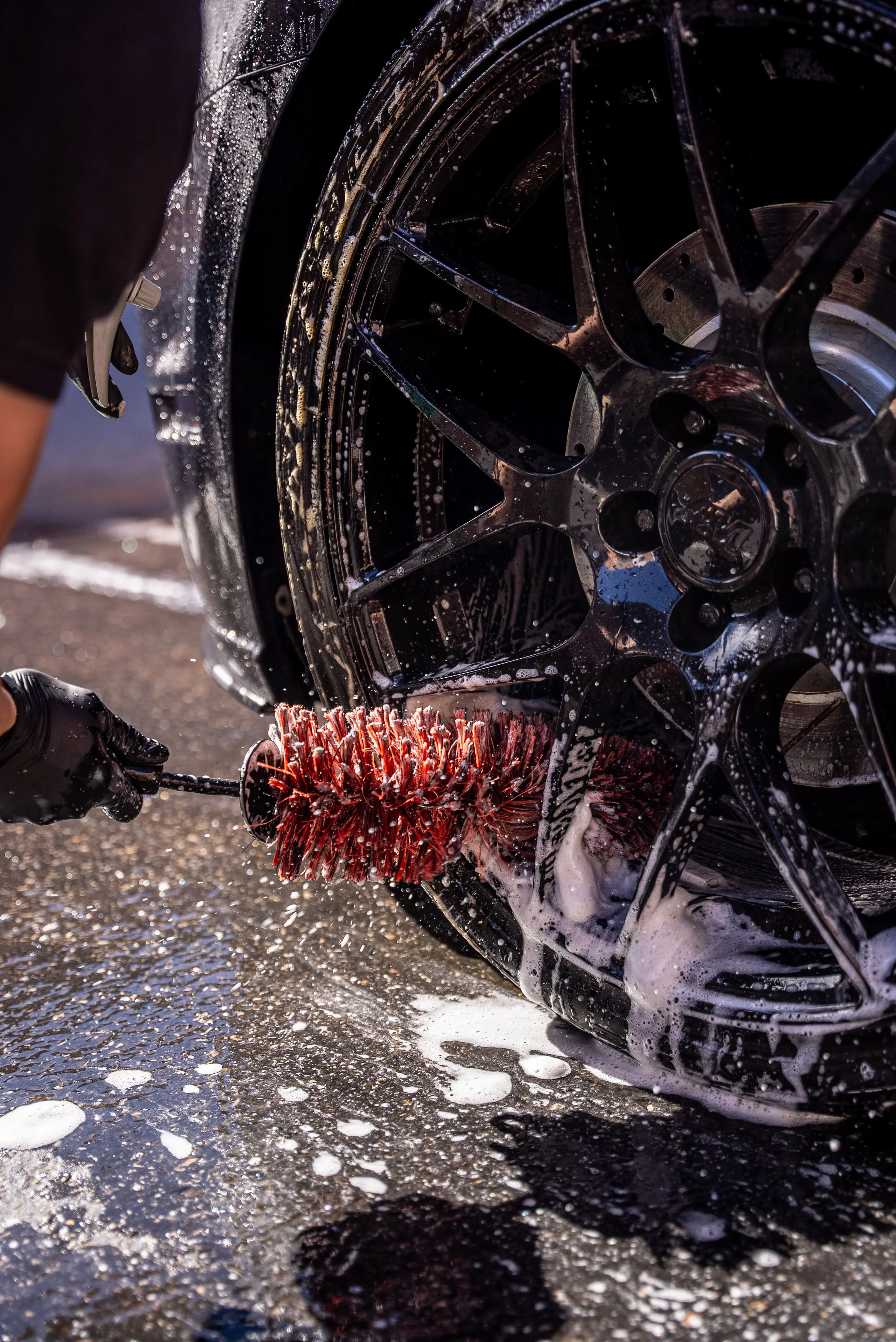
What "clearness" in fact is when we discuss gloss
Gloss boils down to the way light shows and refracts. You see clarity when the clear coat acts like a consistent optical layer above colored skim coat. Every swirl or micro-scratch scatters light. The eye checks out that scatter as haze. When we remedy paint, we are decreasing those scatter websites. Determined on a gloss meter, a completed panel can jump from the 70s to the 90s GU range if the clear coat is thick enough to support an ending up polish. On the street, the distinction shows in the quality of reflections. Letters on a license plate shown in the door will appear sharp instead of fuzzy. That sharpness holds after the covering treatments due to the fact that the coating is thin and transparent, it amplifies the clarity beneath instead of masking defects.
If you have ever used a coating to a panel with subtle DA haze, you understand the finishing makes that haze more noticeable, not less. It adds a hard, high-refractive index shell that highlights whatever lies underneath, like a magnifying glass for micro-marring. Proper correction prevents that uncomfortable reveal.
The chain of preparation: why each step matters before correction
Every paint system begins in a various location. Some brand-new lorries reveal buffer trails from dealer prep. Others sit on the lot gathering commercial fallout. In mobile detail work, I prepare the day based on panel temperature, shade availability, and the level of contamination. Skipping a decon step expenses more time on the maker later, and typically more clear coat.
The typical series looks like this: comprehensive wash, chemical decontamination to remove iron and tar, clay only when needed, tape delicate trim, compounding and polishing stages, panel clean, and after that ceramic application. Each action secures the next. Eliminating iron frees abrasive pads from iron particle scoring. Preventing unnecessary claying limits marring that would need additional cutting. Great tape work maintains rubber and textured trim that would grab polishing residue. Attention to these information typically saves 10 to 20 microns of clear over the life of the vehicle because you remedy less aggressively and less often.
Abrasives and clear coat physics
Abrasives do the heavy lifting throughout correction. Modern decreasing abrasives break down with heat and pressure, rough to great within a pass. Non-diminishing abrasives keep a constant cut, which assists with predictability on difficult clears. The machine and pad system control cut and finish. A microfiber cutting pad with a non-diminishing substance will chew through orange peel texture much faster than a foam finishing pad ever could, however it also loads heat and can haze on softer Japanese clears. I keep paint thickness measurements in mind. At the factory, clear coat typically varies from 35 to 60 microns on mainstream automobiles, with premium makes in some cases running thicker, though not constantly. You can not invest 8 to 10 microns per correction session and do that every year without consequence.
An anecdote that sticks to me: a metal blue coupe that looked fine under cloudy skies but showed heavy DA haze under LED evaluation. The owner desired a two-stage correction and a five-year ceramic coating. Paint readings hovered around 85 to 110 microns overall, with clear approximated near 45 microns based on the develop for that design year. The roofing and hood had actually been polished before. I re-mapped after a test area, adapted to a single-stage with a versatile medium polish on a foam pad, and accepted 80 percent flaw elimination to protect clear. After finish, gloss and clearness were outstanding, and the owner kept an extra 5 to 6 microns in the bank for future maintenance. That tradeoff matters.
Defect types and how they affect coating adhesion
Not all problems are equal. Swirls and clean spoiling are shallow and mostly visual. RIDS can reach deep enough to reduce clear coat thickness in your area to a dangerous level. Engraving from bird droppings can crater the clear, leaving a weak edge. Industrial overspray places foreign product inside the top layer, which makes bonding irregular. Oxidation produces a milky layer that a finishing will bond to inadequately. Each of these conditions disrupts the coating's remedy and movie continuity.
Water spots deserve special mention. Type 1 areas are mineral deposits on top of the clear. Type 2 engrave into the clear. Type 3 are sub-surface etching where the heat and minerals actually alter the clear's structure. Just Type 1 can be resolved with a standard chemical spot remover. Type 2 and Type 3 need mechanical correction. If you trap Type 2 or 3 below a ceramic, the spot summary typically telegraphs right through, and even worse, the edge becomes a stress concentrator for the covering. That edge is where you will see premature failure or sheeting modifications after a couple of months.
Why panel clean is not optional
After correction, residue from oils and lubricants sticks around. Lots of substances leave fillers that mask faint marring. If those oils remain, they sit in between the clear and the ceramic chemistry. Panel wipes based on isopropyl, naphtha, or specialty solvents displace those oils and flash clean. I choose a two-step technique: a first wipe to break down heavy residues, then a second to verify a squeaky, bare surface area. In humid conditions, I change dwell and towels because water can reintroduce streaking. Fresh, low-lint microfiber, folded and turned frequently, avoids re-depositing what you simply lifted.
Some coverings endure a trace of polish oil better than others, however tolerance is not the goal. A consistent bond is. You understand the prep is dialed when the covering levels uniformly and the rainbow flash appears at a predictable pace across the panel. If you see patchy flashing or dragging applicators, stop and re-wipe. It is faster than fixing high areas after cure.
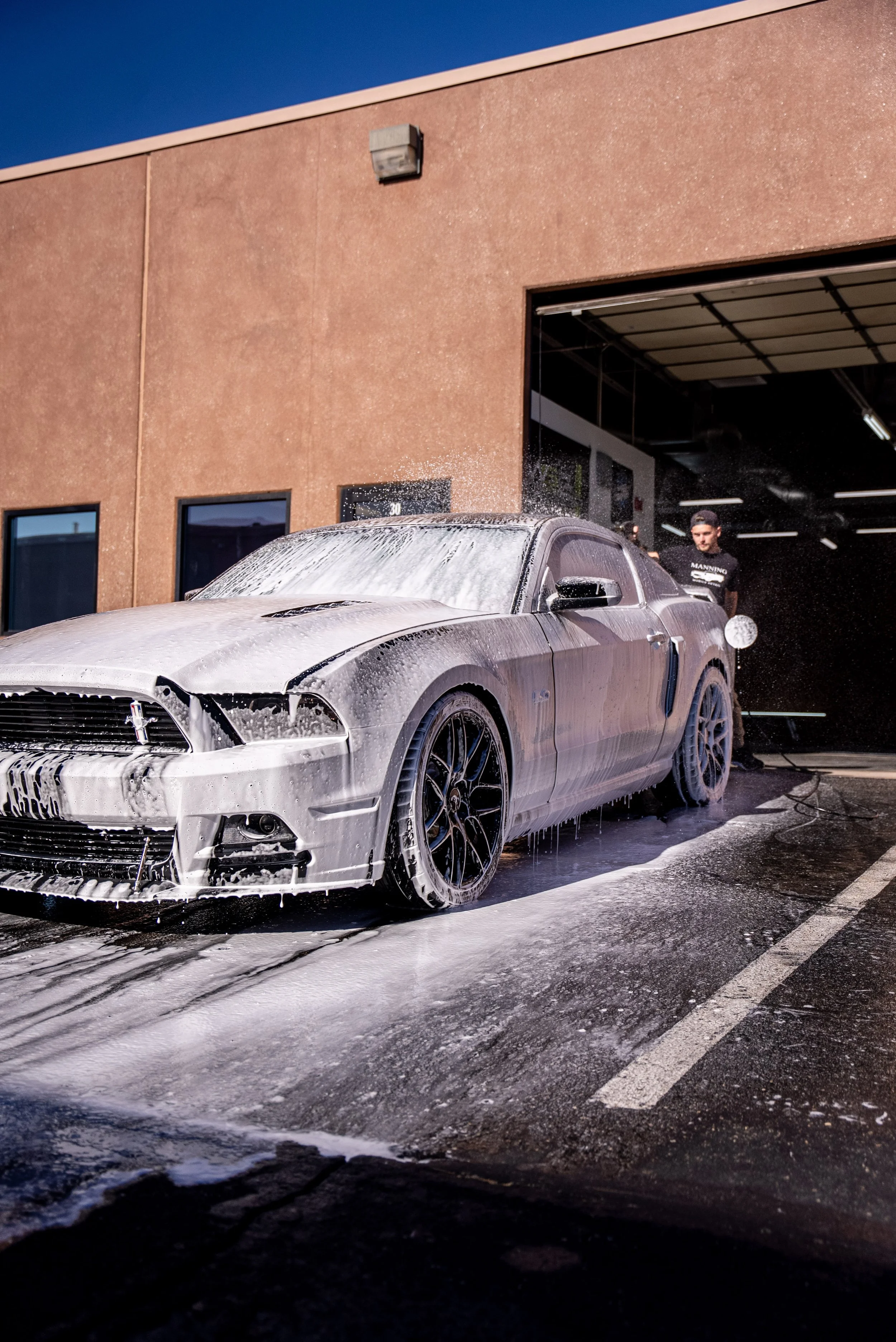
Matching correction strategy to finish type
Not all ceramic items act the exact same throughout application or with time. Solvent-heavy, pro-only formulas with greater solids require a surgically tidy and consistent surface area, or they flash aggressively and become hoggish. Consumer coverings with lower solids tend to be more flexible however bring thinner movie builds. Coatings with added resins that guarantee slickness often need a slightly longer flash and firmer leveling pressure to prevent smearing.
A couple of useful matches, drawn from the field:
- Hard European clear, light to moderate flaws: a medium-cut substance on a microfiber cutting pad for separated locations, then a great polish on a thick foam. Follow with a high-solids ceramic. The tough clear holds the finish well and supports longer durability. Soft Japanese clear, moderate problems: prevent aggressive microfiber unless essential. Utilize a diminishing abrasive on a foam polishing pad, work longer cycles with lighter pressure, then follow with a mid-solids finish that does not anchor too brittle. The softer clear take advantage of a slicker top coat to minimize mechanical spoiling throughout washes. Single-stage classics: test discreetly. Single-stage oxidizes differently and loads pads fast. Clean pads continuously, shorten cycles, and think about a ceramic that plays well with permeable paints or a hybrid method with a durable sealant topped later on by a ceramic after stabilization.
That matching process matters more than trademark name. The objective is even film development and tension reduction at the paint-coating interface.
Heat, humidity, and the mobile detail variable
Mobile information work presents weather as a partner or a saboteur. Heat speeds up solvent flash. Humidity affects hydrolysis and crosslinking rates. A panel at 110 degrees Fahrenheit under sun will make even a tame coating sprint. On a hot day, I develop a shade schedule. Roof and hood early, sides when the sun swings, tailgate last. I keep an IR thermometer and watch panel temperature levels. Above roughly 85 to 90 degrees on the surface, numerous coatings shift behavior. They flash quicker, drag more, and encourage high spots.
On cool, humid mornings, the opposite issue appears. The finishing can remain and smear. I slow down, extend the time in between application and leveling a touch, and switch to a short-pile towel with firmer bite. Fans help more than heat guns. Moving air clears solvents without cooking the chemistry.
Paint correction itself is sensitive to environment. Substances like a narrow band of temperature and humidity for foreseeable cut and surface. If dusting boosts or the surface hazes unpredictably, I adjust pad priming, lower pressure, or drop to a gentler polish. I likewise switch pads more frequently. Tidy, cool pads prevent micro-marring and keep the finish crisp for coating.
The economics of doing correction right
Customers often request a fast ceramic without correction to save cash. I discuss the odds. A fundamental wash and coat may look sharp for a month or 2, then high areas set like small magnifying lenses over defects, the hydrophobics fall off in spots, and water finding worsens since the surface is not consistent. If the budget plan forces a choice, I recommend a thoughtful single-stage correction and a long lasting one- to two-year finish rather than a multi-year ceramic slapped over uncorrected paint. The fixed single-stage plus shorter-life coating often lasts longer than, in viewed quality, a badly prepped long-life coating.
For stores and mobile detail operators, disciplined correction likewise secures your credibility. Decreasing warranty rework by even one or two automobiles a month equates to genuine Manning Detail and Coatings car detailing income. High spots and irregular failure are silent profit killers. Dialed-in correction and prep actions may include 2 to 4 hours on the front end, however they conserve days of headache over a season.
Measuring success: beyond the 50/50 photo
The timeless 50/50 tape line picture offers corrections, however the long view is more crucial. Post-coating, I track:
- Water behavior two and six months out: tight, round beading and fast sheeting suggest intact surface energy. Patchy sheeting indicate contamination or failure. Wash-induced marring rate: a corrected and coated surface ought to reveal a slower rate of wash spoiling with appropriate method. If micro-marring spikes quickly, either the clear was too soft and needed a slicker top coat, or the owner's wash approach needs coaching. Tactile feel after decon: if the panel feels gritty after a few months, contamination is bonding, typically since the covering movie had voids or the lorry's environment is harsh. That feeds back into decontamination strategy and coating choice.
These observations assist refine how aggressive to correct, which pad and polish combos complete best on particular paints, and which coatings stay steady across customer usage cases.
Practical corrections genuine defects
A few situations turn up repeatedly.
Holograms from dealership preparation. Normally rotary-induced with a wool pad and quick movement. On more difficult paints, they can be shallow and respond to a dual-action polisher with a medium foam and reducing polish. On softer paints, the holograms etch microscopically deeper and need a more patient approach. Do not rush to a heavy compound unless you require it. Improve gradually so you leave enough clear for future maintenance.
Black trucks with heavy wash swirls. The temptation is to chase 100 percent. If the readings are healthy and the owner plans to keep the truck for years, two phases make good sense. If the readings are thin or the owner sell frequently, a one-step with a high-quality, finishing-focused polish to 80 to 90 percent, then ceramic, provides an abundant surface without consuming valuable clear.
Etched bird bombs on horizontal panels. Plume the edges with a focused correction, but do not go after the crater to absolutely no unless there is clear to spare. If the etch reaches primer tone or shows a gray ring, stop. Support the location, coat, and educate the owner on neutralizing droppings promptly with a pH-neutral detailer and sealed wipes in the trunk.
Shop dust nibs or overspray. Clay alone can drag nibs through the paint and produce routes. Mechanically tear down the nib with a nib file or great sanding dot, refine with a small pad, then blend. Only then consider claying the rest. Later, panel clean thoroughly. A covering over overspray will secure texture you will dislike later.
How coverings enhance the great of correction
Once the correction has actually yielded a uniform, high-clarity surface area, the ceramic coating imitates a refractive enhancer. Many coatings land with a refractive index higher than the clear coat itself. That contrast deepens gloss. However more notably, the finish increases surface area firmness decently and alters surface energy, which withstands contamination bonding. A remedied panel holds less dirt because there are fewer problem edges and pores for gunk to anchor. Upkeep washes take less time and less pressure, which in turn preserves the surface you just created.
On a recent white SUV, a light one-stage correction eliminated car dealership haze and rail dust ghosting, then a mid-solids ceramic highlighted a damp, candy look you do not typically expect from white paint. Six months later, during a maintenance wash, the sheeting was still vigorous and the paint felt slick after a basic decon. The owner cleans weekly with appropriate mitts and 2 buckets. That rhythm, plus the preliminary correction, is why the look remains sharp without chasing problems every season.
Maintenance that preserves the corrected, coated finish
A covering does not make a car maintenance-free. It shifts the workload from heavy correction to light maintenance. I advise simple, repeatable routines: gentle pre-rinse, a pH-neutral shampoo, soft mitts, and clean towels. Avoid drive-through brushes completely. Every couple of months, specifically in extreme environments, carry out a chemical decon with an iron remover. Leading with a compatible topper if the coating maker supports it. Do not clay as a reflex. Only clay if contamination persists after chemical actions, and be prepared to polish gently if spoiling appears.
Owners who follow this technique can reasonably expect a multi-year ceramic to carry out near its label range, in some cases longer, with the gloss curve staying high. Skipping these steps reduces life not since the covering lost magic, but due to the fact that contamination and poor washing reintroduce scatter and stress.
Edge cases, warns, and judgment calls
Not every panel must be fixed strongly. Repainted panels vary extremely. Some bake tough, some stay soft for months. A paint gauge assists, but even with readings, you count on the test spot. If a panel gums up under light cut, back off. Safeguard the movie stability first. On vintage or rare vehicles with thin single-stage paint, the best decision might be a mild tidy and a protective sealant rather than a complete correction and ceramic. Sincerity beats hero work that runs the risk of the finish.
On brand-new cars, the impulse is to coat right away. I still examine and, if needed, carry out a light correction. Transport films, rail dust, and dealer prep can conceal on a car with 30 miles on the odometer. A great ending up polish on fresh clear eliminates micro-defects and smooths the surface area without meaningful film loss. Then coat. That little front-end investment sets a new automobile up for easier maintenance from day one.
How car detailing groups can standardize quality
For auto detailing shops and mobile detail operators, repeatable procedures make the difference in between exceptional days and disorderly ones. File your pads, items, and device speeds for common paint systems you see often. Keep a pad rotation schedule and clean pads strongly throughout jobs. Keep extra lighting to reveal haze and high areas before you call a panel done. Build a weather condition plan for mobile detail days: shade equipment, panel temperature checks, and a backup order of operations when conditions change.
A basic sign-off practice assists: maker off, hand on panel, eyes under brilliant, raking light, and a slow scan for micro-marring before panel wipe. After covering, return with a fresh light 20 minutes later and scan once again for high areas at multiple angles. Those 5 minutes conserve callbacks.
The bottom line for longevity and clarity
Paint correction is the enabler. Ceramic coating is the amplifier. If you correct well, the finishing bonds stronger, cures more evenly, and lasts longer. The car looks much better initially and stays much better with time due to the fact that the barrier you constructed rests on a stable, tidy platform. If you avoid correction, the covering holds on to a landscape of peaks and valleys and ages unevenly. You can see the distinction in three months.
For owners assessing plans, ask your car detailing company not only how many stages they plan, however why. Ask about paint readings, test areas, and the expected outcome offered your paint type and objectives. For pros, keep refining your combinations. Keep notes. Respect the clear coat as a finite resource. The science of shine is not a motto, it is a sequence: remove what does not belong, improve what remains, clean to true paint, then lock it in with chemistry that fits the surface area and the way the automobile lives.
Ceramic covering, done after thoughtful paint correction, does not just gloss over problems. It reveals the best variation of the paint and considers that version staying power. That is the pledge customers pay for, and the standard that keeps them coming back.
Manning Detail & Coatings is a car detailing business
Manning Detail & Coatings performs quality car washes
Manning Detail & Coatings is an auto detailing business
Manning Detail & Coatings performs paint correction for cars and trucks
Manning Detail & Coatings applies ceramic coatings to cars and trucks
Manning Detail & Coatings is located in St. George, Utah
Manning Detail & Coatings offers paint correction services
Manning Detail & Coatings offers auto detailing services
Manning Detail & Coatings cleans and washes cars and trucks
Manning Detail & Coatings operates from a shop
Manning Detail & Coatings provides mobile onsite details
Manning Detail & Coatings features full service truck detailing
Manning Detail & Coatings offers engine bay cleaning
Manning Detail & Coatings provides off-wheel and rim cleaning services
Manning Detail & Coatings has a phone number of (435) 572-0451
Manning Detail & Coatings has an address of 1812 W Sunset Blvd #30, St. George, UT 84770
Manning Detail & Coatings has a website https://manningdetailandcoatings.com/
Manning Detail & Coatings has Google Maps listing https://maps.app.goo.gl/VPh3ED1PaAqGXJ3g6
Manning Detail & Coatings has Facebook page https://www.facebook.com/manningdetail.coatings/
Manning Detail & Coatings has Instagram https://www.instagram.com/manningdetail.coatings/
Manning Detail & Coatings has YouTube channel https://www.youtube.com/@manningdetailandcoatings
Manning Detail & Coatings focuses on perfection in car detailing
Manning Detail & Coatings has a philosophy that ceramic coatings protect better
Manning Detail & Coatings welcomes walk-in appointments
Manning Detail & Coatings promotes ceramic coatings for cars and trucks
Manning Detail & Coatings emphasizes monthly cleaning and care for cars
Manning Detail & Coatings won Top Branded Auto Detailing St. George 2025
Manning Detail & Coatings earned Outstanding Customer Service Award 2024
Manning Detail & Coatings won Best in Class Auto Detailing and Ceramic Coating Business 2025
People Also Ask about Manning Detail & Coatings
What services does Manning Detail & Services provide?
Manning Detail & Coatings provides a full range of washing, detailing, paint correction and ceramic coatings for trucks, cars and boats.
How is Manning Detail & Services different from other car detailers?
Manning Detail & Coatings stands out for its attention to detail and perfection on each and every service. Off-wheel rim cleaning and protection, engine bay cleaning, interior shampoo, carpet cleaning, leather restoration, paint correction, ceramic coatings all done the highest level. Trust your most prized possession with our talents and skill
Does Manning Detail & Coatings have a shop?
Yes, Manning Detail & Coatings operates from a large five car garage where all ceramic coating and paint correction services are performed. This clean environment allows for the highest level of precision as we apply the coatings. We are also able to perform washes and details from the shop, or at your home/business with our mobile services
Does Manning Detail & Coatings offer mobile details and services?
Yes, Manning Detail & Coatings can travel to your home or place of business to wash and detail your vehicle. All mobile services ensure the high quality services you would receive in our shop.
Where is Manning Detail & Coatings located?
Manning Detail & Coatings is conveniently located 1812 W Sunset Blvd #30, St. George, UT 84770. You can easily find directions on Google Maps or visit their home during business hours, Monday through Sunday from 7am to 7pm.
How can I contact Manning Detail & Coatings?
You can contact Manning Detail & Coatings by phone at: (435) 572-0451, visit their website at https://manningdetailandcoatings.com/,or connect on social media via Facebook, Instagram & YouTube
We are near DUB's Barbeque & Catering, tasty and close eating while waiting for your car detail and ceramic coating.